If you’ve ever stared at a rubber gasket and thought, “Wait, just how much force can this thing take before it fails?”, you’re not alone. As a rubber gasket supplier, I get this question all the time—usually from engineers mid-project, shop owners troubleshooting a leak, or even construction folks who accidentally grabbed the wrong gasket for a job. The short answer? Shear strength of rubber gaskets isn’t a one-size-fits-all number. It depends on way more factors than you’d think, and getting it wrong is how you end up with a pipe leak mid-shift or a hydraulic seal that blows on a work site. Let’s break this down like we chat around the shop floor, no stuffy jargon (well, a little, but I’ll explain it). Rubber Gaskets
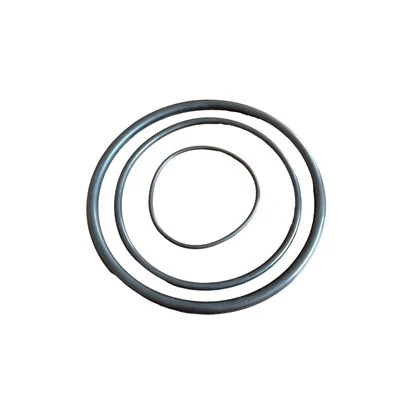
First, let’s keep shear strength simple, okay? Shear is the force that slides two surfaces past each other, right? Like if you push the top of a book to the right and the bottom to the left—rubber gaskets deal with that all the time. They’re usually sandwiched between two flanges, valves, or plates, so when those parts shift a tiny bit (even just from thermal expansion or pressure spikes), the gasket has to hold that sliding force without tearing or slipping. That’s its shear strength.
Now, why does rubber’s shear strength matter so much? Let’s use a common example: a commercial HVAC system. The metal flanges connecting the ductwork expand and contract as the system runs—hot air makes the flanges stretch a little, cold makes them shrink back. If the gasket between them has low shear strength, it’ll slide right out of its groove, leave a gap, and suddenly your building’s lobby is blowing cold air in winter (or hot air in summer) and your energy bill spikes. Or take a hydraulic line on a farm tractor—those lines vibrate nonstop when you’re plowing fields, and the constant tiny shifts test the gasket’s shear strength. Too weak, and the gasket fails mid-harvest, leaving you stuck with a machine that can’t move for days.
Here’s the thing I have to tell customers all the time: there’s no generic “shear strength for rubber gaskets” because rubber itself isn’t a single material. That’s where most mistakes happen. Let’s go over the common rubber types we work with, and what their shear strength usually lands at, relative to other materials.
First, EPDM—super common for HVAC, water pipes, roofing gaskets. EPDM’s shear strength runs around 1,000 to 1,500 psi. Wait, let’s make that relatable: psi is pounds per square inch, so think of a 1-inch square piece of EPDM; it can handle 1,000 to 1,500 pounds of sliding force before it tears. It’s flexible, weather-resistant, so it’s great for outdoor stuff, but if you’re using it for high-pressure hydraulic lines, that might not be enough.
Next, Neoprene (CR)—this one’s workhorse for industrial applications, oil resistance, and moderate shear. Its shear strength is roughly 1,200 to 1,800 psi. A little stronger than EPDM, good for things that get exposed to light oil, like food processing equipment or general-purpose pipe connections.
Then there’s Nitrile (NBR)—if you’re dealing with oil or fuel, this is the go-to. Nitrile’s shear strength is usually 1,500 to 2,500 psi. Way sturdier for those high-friction, oil-heavy jobs like automotive fuel lines or industrial hydraulic hoses. It’s not as weather-resistant as EPDM, but shear-wise, it’s way up there.
And for the heavy-duty stuff? Viton (FKM). We use Viton for extreme conditions—super high temperatures, aggressive chemicals. Its shear strength is around 2,000 to 3,000 psi. That’s serious force. If you’ve got a chemical processing plant handling acids or harsh solvents, Viton’s shear strength is non-negotiable here.
Wait, but hold on—those numbers are just baselines. Actual shear strength isn’t just about the rubber type. Like, the gasket’s thickness matters a lot. A thicker gasket (say, ¼ inch) has higher shear strength than a thin one (⅛ inch), all else equal. If you stack two thin gaskets, that’s different too—they might slide against each other, which can lower total shear strength. Also, the hardness of the rubber (measured on the Shore A scale) plays a role. Harder rubber (higher Shore A, like 70 to 90) has higher shear strength, but it’s less flexible, so it won’t conform to uneven flanges as well. So you can’t just grab the hardest rubber you can find—you need to balance shear strength with sealing ability.
Another big one: the surface the gasket’s pressed against. If the flange is smooth, the gasket’s friction is lower, so it needs more shear strength to not slide. If the flange has a rough, textured surface, the gasket grips better, so shear strength demands go down. Oh, and how much you torque the bolts when you install the flanges? Too little torque, and the gasket doesn’t seat right, so it can shift easy. Too much torque, and you squish the gasket so flat it loses its flexibility, which actually makes its shear strength worse—plus you might crack the flange. I see customers do this all the time, over-torquing like it’s a competition, then wondering why the gasket fails in a week.
Let’s get real, too—shear strength testing isn’t just a lab exercise. I’ve had a customer come to us last year because their old gaskets kept failing on a high-pressure hydraulic press. They thought they just needed a stronger rubber, but when we tested their installation, the flanges were misaligned by 2 degrees, so the shear force on the gasket was way higher than the spec they had. We swapped them to a thicker Nitrile gasket with a little higher shear strength, and adjusted their installation torque, and they haven’t had a leak since. That’s the stuff you don’t get from a generic number online.
So when you’re picking a rubber gasket, here’s the quick checklist I give new customers:
- What’s the environment? Oil, fuel, water, chemicals, outdoor weather? That narrows down your rubber type first.
- What’s the shear force your application is putting on the gasket? Is it low (like a residential water pipe, ~500 psi max shear) or high (like a hydraulic press, ~2,000 psi)?
- What’s the surface the gasket will sit on? Smooth metal? Plastic? Rough cast iron?
- Don’t forget installation—even the best shear strength gasket will fail if you don’t seat it right.
Now, I know a lot of you might be looking for a “hard number” to plug into a spec sheet, but here’s the honest truth as a gasket supplier: if you only go by generic shear strength numbers, you’re setting yourself up for problems. That’s why we don’t just sell you a gasket and walk away—we ask you questions about your application, share what’s worked for similar jobs, and even can run a custom shear test if you have a specific high-stakes project.
Wait, let’s address a common misconception too. Some people mix up shear strength with tensile strength. Tensile is the force that pulls the gasket apart, like stretching a rubber band until it breaks. Shear is sliding, which is a totally different force. Those numbers are related, but not the same. For example, a soft rubber might have great tensile strength (stretchy) but low shear strength (slides easy). That’s why a rubber band stretches but will slip out of a groove if you pull it at an angle.
Another thing: aging. Rubber degrades over time, right? UV light, heat, chemicals make it harder and brittle, which actually changes its shear strength. A 5-year-old EPDM gasket on an outdoor air handler might have half the shear strength it did when it was new. So if you’re replacing old gaskets, don’t just grab a new one of the same type—test its condition if you can, or upgrade if the application is high-stakes.
So what does all this mean for you, when you’re shopping for rubber gaskets? Skip the generic “shear strength: X psi” lines, and find a supplier who actually knows their stuff. As someone who’s been in the gasket game for a while, I can tell you that every job has unique needs. A residential gasket is totally different from a mining equipment gasket, which is totally different from a pharmaceutical seal that can’t leach chemicals.
If you’re dealing with a project where gasket failure would be a big deal—like a manufacturing line that can’t shut down, or a vehicle that’s transporting hazardous materials—you need to get the shear strength right. We’ve helped tons of customers troubleshoot gasket issues, whether that’s swapping to a rubber with higher shear strength, adjusting thickness, or tweaking how they install the gaskets.
Industrial Components At the end of the day, rubber gaskets are simple parts but they do a huge job—keeping leaks out, pressure in, systems running. Their shear strength is just one piece of the puzzle, but it’s a critical one. If you’re not sure which gasket you need, or you’ve been having issues with shear-related failures, hit us up to talk through your needs. We can share specs for different rubber types, answer questions about shear strength for your specific application, and help you find the right gasket that won’t leave you high and dry.
References
- ASTM International. Standard Test Method for Shear Strength of Elastomeric Seals, ASTM D6256-17. West Conshohocken, PA: ASTM International, 2017.
- Rubber Manufacturers Association. “Elastomeric Gasket Material Properties: Shear Strength and Application Guidelines.” RMA Technical Bulletin 12-2021, 2021.
- Coran, A. Y. “Rubber Materials for Sealing Applications.” Handbook of Elastomers, 2nd ed. CRC Press, 2000, pp. 417–452.
- NASA. “Guidelines for Gasket Selection in Aerospace Fluid Systems.” NASA Technical Memorandum 104256, 1991.
Hengshui Minai Rubber & Plastic Technology Co., Ltd.
Hengshui Minai Rubber & Plastic Technology Co., Ltd. is one of the most professional rubber gaskets manufacturers and suppliers in China, featured by quality products and good price. If you’re going to buy advanced rubber gaskets made in China, welcome to get quotation from our factory. Welcome to contact us for customized service and OEM/ODM service.
Address: West of the Town, Jiangheliu Town, Jing County, Hengshui City, Hebei Province
E-mail: mnrubberseal@outlook.com
WebSite: https://www.mnrubberseal.com/
