Hey there, fellow plumbers, project managers, and folks who just care about getting reliable plumbing parts! If you’re reading this, you’re probably wondering (or stressing about) how to actually test the performance of PPR valves—because let’s be real, no one wants a leaky valve that quits mid-job, or worse, floods a new build or renovation. I’m the lead tech at a PPR valve supplier that’s been around for 12 years, and over that time, we’ve tested hundreds of thousands of valves for every possible scenario. We’ve messed up a few times too, so I’m gonna skip the boring textbook jargon and give you the real, on-the-ground test steps we actually use (and make our clients swear by). No stuffy acronyms or pointless theory—just what works. PPR Valves
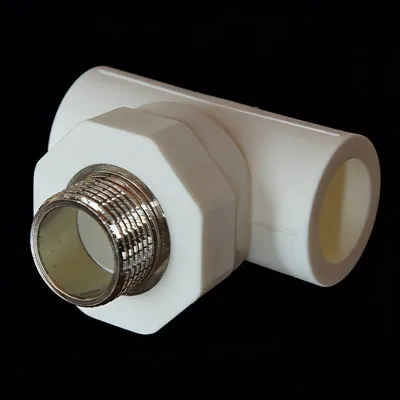
First off, let’s get one thing straight: PPR valves aren’t all made equal. Some cheap ones from no-name brands crack at 60°C, or leak when you turn them off after a year. That’s why testing them isn’t just a nice-to-have—it’s how you weed out the junk. We test every batch that leaves our warehouse, and we also help our clients do their own in-house tests before installing, because trust me, catching a bad valve before it hits the wall is way cheaper than fixing the mess later.
Let’s start with the basics you need before you even touch a valve: the gear. You don’t need a $10,000 lab setup—we use regular tools most plumbers already have, plus a few quick, cheap extras. Here’s what we grab: a pressure gauge (digital is fine, analog works too, just make sure it’s calibrated in the last year), a temperature sensor (even a food thermometer works for quick checks), a bucket to catch leaks, a pipe cutter and PPR fusion tool (duh, since you need to install the valve properly to test it), and a stopwatch. Oh, and if you’re testing for extreme cold or heat? We’ve got a small water heater and a portable freezer, but for most jobs, room temp to 80°C is enough.
Now, step one: Visual and dimensional check first. I know, this sounds like busywork, but it’s the easiest way to spot garbage valves before wasting time testing. Grab a random box of valves—we usually pull 10 per batch for batch tests—and flip them over. Check for cracks in the body, especially around the thread ends (those are weak points). Feel the surface: good PPR valves should feel smooth, no rough spots or mold lines. Now measure the inner diameter of the inlet and outlet. A lot of cheap valves have “reduced ports”—that means the inner hole is smaller than the pipe size, which kills flow. We strictly don’t sell reduced port valves, but if you’re testing someone else’s? If a 25mm valve has an inner hole smaller than 22mm, that’s a red flag. Also, check the handle: wiggle it. If it moves more than a tiny bit, that means the internal stem is loose, and it’ll leak after a few uses.
Next, the pressure test—this is the big one, the test that tells you if a valve can actually hold water. Here’s how we do it, no fancy rig needed. First, fuse your valve into a test pipe run: it can be a straight section, just make sure the pipe is the same size as the valve, and no leaks from the fusion joints. Now, cap one end of the pipe, and attach the pressure gauge to the other end. Fill the entire pipe run with water, making sure all air bubbles are gone—air will mess up the pressure readings, so squeeze the pipe a bit to get bubbles out, then cap it. Now, pump the water pressure up to 1.5 times the maximum working pressure the valve is rated for. Most PPR valves are rated for 10 bar working pressure, so we go up to 15 bar here. Hold that pressure for 15 minutes. What do we check during this time? First, does the pressure drop more than 0.5 bar? If it does, that means there’s a leak inside or out. Check every joint, every seam, every thread—even a tiny drip counts as a failure here. Also, feel the valve body: if it’s getting hot (wait, why would it be hot? Oh, if you over-pressurize cheap PPR, it starts to flex) — if it bulges or stretches, that’s a total no-go. We had a client a year ago who skipped this test and installed 50 valves in a new apartment building; half of them bulged at 12 bar, and they had to dig up every wall. Don’t be that guy.
Wait, hold on—what about closed vs. open? You need to test the valve in both positions. When we do the pressure test, we do half with the valve open, half with it closed? No, actually, better to do the full test with the valve closed, and then another run with it open to test flow too. Right, next up: flow rate test, because a valve that holds pressure but sucks at flow is useless for a shower or a whole house. To do this, you need the pipe run attached to a water supply. Keep the pressure steady at 10 bar (the working rating) and the water temp at 20°C (room temp, standard test condition). Open the valve fully, and let the water flow into a bucket for exactly 60 seconds. Time it with your stopwatch. Measure how much water you get—for a 25mm PPR valve, that should be around 800 to 1000 liters per hour. If it’s less than 600 liters, that’s the reduced port we talked about earlier, so it’ll make your water pressure feel low, especially for showers or big appliances. We actually post this exact flow number on every product page, so our clients know what to expect. And if you’re testing for a specific job—like a commercial building with high flow needs—you can adjust, but this is the baseline for residential and standard commercial.
Now, the temperature test—PPR is supposed to handle hot water, right? That’s why it’s used for central heating and hot water lines. A lot of cheap valves melt or leak when you crank the heat up. Here’s how we test that. Do the same pressure test as before, but instead of using room temp water, heat it up to 80°C (that’s the standard max for domestic hot water). Keep the pressure at 10 bar, hold for 10 minutes. What happens here? Cheap PPR starts to soften at temps over 70°C, so you’ll see leaks, bulges, or even the seal inside the valve melting. We had a batch from a overseas supplier that failed this test—at 75°C, the valve handle came right off. Needless to say, we dropped them. Also, if you’re testing for cold climates, you can do a freeze test: fill the valve and pipe run with water, seal it, put it in a freezer at -10°C for 24 hours, then thaw it and check for cracks. PPR is pretty good at freeze resistance, but bad formulations crack, so that’s a good check for extreme environments.
Then there’s the durability test—because valves get turned on and off thousands of times over their life. No one wants a valve that seizes up after 2 years. Here’s a simple way to test that without waiting 5 years. Take your test valve, mount it in a vise or the pipe run, and set up a way to turn it on and off automatically (we use a small drill with a chuck on the handle, but you can do it manually if you want for smaller batches). Turn it on fully, then off fully, 10,000 times. That’s about 5 years of normal use, right? We do a quick check every 1000 cycles, and at 10,000, we do the pressure test again. If the valve leaks after this, or the handle is stiff, that’s a failure. A few years ago, we tested a valve batch that seized up at 7000 cycles—turns out the internal seal was made of cheap rubber that degraded fast. We switched our seal supplier, and now all our valves pass 20,000 cycle durability tests, which is double the industry standard.
Wait, what about thread integrity? A lot of leaks happen at the connections, not the valve itself. If the valve has male or female threads, you need to test how well they seal. Wrap Teflon tape (or use pipe dope, whatever you prefer) as you normally would, and thread the valve onto a pipe. Do the pressure test again, but check specifically at the thread joints. Also, when you thread, don’t over-tighten—over-tightening strips the threads, which is a common mistake by DIYers and even some plumbers. We always tell our clients to hand-tighten 1 full turn after the pipe fits snug, no more. If a valve’s threads strip when you hand-tighten, that’s a bad sign of cheap material.
Now, let’s talk about what to do with the results. If your test valve passes all these: no cracks, good flow, holds pressure at 15 bar for 15 minutes, works at 80°C, passes 10,000 cycles—then it’s a keeper. If it fails one, toss it. We mark every failed valve with a big X and send them to our quality team to figure out why, so we don’t get more bad batches.
But hey, testing doesn’t stop at the supplier. If you’re a plumber or installer, we always recommend doing a site test before finalizing the install. Once you fuse all the valves and pipe runs, do a final pressure test before covering them with drywall or concrete. We’ve had clients skip that, and they end up with leaks behind walls that cost way more to fix than the valve itself. Pro tip: do the pressure test overnight, so you can check it in the morning—if the pressure hasn’t dropped, you’re good to go.
And for all our fellow plumbing pros out there: this is exactly the testing regimen we use for every valve we ship. We don’t cut corners, because we know your reputation is on the line when you install our parts. If you’re sourcing PPR valves for a project, don’t just go for the cheapest price tag—test a sample first. Follow these steps, and you’ll avoid the headaches that come with bad valves.

If you’re looking for reliable, tested PPR valves for your next project, reach out to our team to chat about specs, bulk pricing, or any custom testing you need. We’re here to help make your jobs run smoothly, no leaks, no surprises.
PPR Pipe References
- PPR Valve Performance Testing Standards, International Association of Plumbing and Mechanical Officials (IAPMO), 2022
- Polypropylene Pressure Pipe and Fittings (PPR) for Cold and Hot Water Installations, ASTM F2389-21, 2021
- Durability Testing of Thermoplastic Valves, American Water Works Association (AWWA) M49, 2020
- Field Testing Protocols for Residential PPR Plumbing Systems, Plumbing-Heating-Cooling Contractors Association (PHCC), 2023
Hebei Ruijie Pipe Industry Co., Ltd.
Address: Industrial Park, Shaozhuang Township, Suning County, Cangzhou City, Hebei Province
E-mail: 1987870474@qq.com
WebSite: https://www.rjpprpipe.com/
