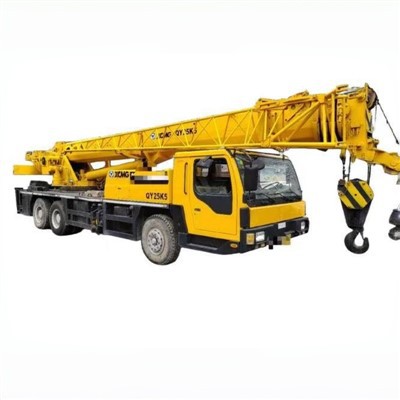
As a mobile crane supplier deeply involved in the industry, I’ve witnessed firsthand the critical role that signal codes play in the safe and efficient operation of mobile cranes. In this blog, I’ll delve into what these signal codes are, why they are so important, and how adherence to them can ensure seamless operations in various lifting tasks. Mobile Crane

Understanding the Basics of Mobile Crane Signal Codes
Mobile crane signal codes are a set of standardized gestures, audio signals, and sometimes visual cues used to communicate between the crane operator and the signal person on the ground. These codes are essential because the crane operator often has limited visibility of the load, the surrounding environment, and the people working in the vicinity. Effective communication through these codes helps avoid accidents, damage to property, and ensures that the lifting operations are carried out smoothly.
The origin of these signal codes can be traced back to the early days of crane operations when there was a growing need for a universal way to convey information. Over time, various international and national standards have been developed to standardize these codes. In many countries, the standards set by the Occupational Safety and Health Administration (OSHA) in the United States and the International Organization for Standardization (ISO) are widely followed.
Types of Signal Codes
Hand Signals
Hand signals are perhaps the most commonly used form of communication in mobile crane operations. They are simple, easy to understand, and can be used in a variety of environments, even where there is a lot of noise.
- Lift and Lower: A closed fist with the thumb pointing upward indicates that the load should be lifted. Conversely, a closed fist with the thumb pointing downward means the load should be lowered. These signals are clear and can be easily seen by the crane operator from a distance.
- Swing: To direct the crane to swing to the right, the signal person extends the arm horizontally with the palm facing down and moves it in a half – circle to the right. For a left – swing, the motion is simply reversed. This allows precise control of the crane’s rotation.
- Stop: A flat hand held out horizontally with the palm facing down is an immediate stop signal. The operator must halt all crane movements upon seeing this signal.
Audio Signals
Audio signals are used in addition to hand signals, especially in noisy environments or when the visual contact between the signal person and the operator is disrupted.
- Continuous Horn Blast: A long, continuous horn blast is often used as an emergency stop signal. It can quickly catch the attention of the operator and alert them to a dangerous situation.
- Short Horn Blasts: Short, intermittent horn blasts can be used to indicate different actions. For example, one short blast might mean "prepare to start," while two short blasts could signal "start the movement."
Radio Communication
In modern mobile crane operations, radio communication is also widely used. It allows for more detailed and immediate communication between the signal person and the operator. However, it is important to use a standardized set of phrases to avoid misunderstandings. For example, instead of saying "move it up a bit," the signal person should use a more precise term like "lift the load by one foot."
Importance of Signal Codes in Mobile Crane Operations
Safety
Safety is the primary reason for using signal codes. Mobile cranes are large and powerful machines, and any miscommunication can lead to serious accidents. For example, if the signal person fails to clearly indicate the direction of the swing, the crane could hit nearby structures or people. By using standardized signal codes, the risk of such accidents is significantly reduced.
Efficiency
Signal codes also improve the efficiency of crane operations. When everyone involved in the lifting task understands the same set of codes, the operations can proceed smoothly without unnecessary delays. For example, the operator can quickly respond to the signals and adjust the crane’s movements, which saves time and increases productivity.
Compliance
In many industries, compliance with safety regulations is mandatory. Using the correct signal codes is a part of these regulations. Failure to comply can result in fines, legal issues, and damage to the reputation of the company. As a mobile crane supplier, I always emphasize to my customers the importance of using signal codes in accordance with the relevant standards.
Challenges in Implementing Signal Codes
Language Barriers
In international construction projects or in workplaces with a diverse workforce, language barriers can pose a challenge. While the basic hand signals are universal, the use of radio communication can be affected by different languages. To overcome this, it is important to provide training in the standardized signal codes in multiple languages and ensure that all workers understand the critical signals.
Environmental Conditions
Harsh environmental conditions such as rain, snow, fog, or strong winds can make it difficult to see hand signals or hear audio signals. In such cases, additional measures may be needed, such as using lighted signals or increasing the volume of audio equipment.
Training and Certification
Proper training and certification are essential for both crane operators and signal persons. As a mobile crane supplier, I often collaborate with training institutions to provide comprehensive training programs. These programs cover the theory and practical applications of signal codes, as well as emergency procedures.
During the training, the participants learn about the different types of signal codes, practice using them in various situations, and understand the importance of clear communication. After completing the training, they are required to pass a certification exam to demonstrate their proficiency in using the signal codes.
In – house Training Programs
Many companies also develop their own in – house training programs to ensure that their employees are well – versed in the specific signal codes used in their operations. These programs can be customized to the company’s needs and the types of mobile cranes they use.
However, it is important to note that these in – house programs should still be based on the national and international standards to ensure compliance and safety.
Maintaining and Updating Signal Codes
Signal codes are not static. As technology advances and new safety concerns arise, the codes need to be updated regularly. For example, with the development of more advanced mobile cranes with additional features, new signals may be required to control these features.
I always keep my customers informed about any changes in the signal codes and provide them with the necessary resources to update their training programs. This includes distributing new safety guidelines, organizing refresher courses, and providing access to the latest industry information.
Conclusion
In conclusion, signal codes are an integral part of mobile crane operations. They are essential for safety, efficiency, and compliance. As a mobile crane supplier, I am committed to promoting the proper use of signal codes among my customers. By providing high – quality mobile cranes, comprehensive training programs, and up – to – date information, I aim to ensure that my customers can carry out their lifting tasks safely and efficiently.
Crawler Excavator If you are in the market for a mobile crane or need more information about signal codes and crane operations, I encourage you to reach out to me for a procurement discussion. I am here to help you find the best solutions for your lifting needs.
References
- Occupational Safety and Health Administration (OSHA) Standards for Crane Operations
- International Organization for Standardization (ISO) Crane Safety Standards
- Industry publications on Mobile Crane Operations and Safety
Shandong Xinyang Special Purpose Vehicle Manufacturing Co., Ltd.
As one of the most professional mobile crane manufacturers and suppliers in China, we’re featured by quality products and good price. Please rest assured to buy cheap mobile crane made in China here from our factory. Contact us for more details.
Address: Quanpu Industrial Park, Liangshan County, Jining City, Shandong Province.
E-mail: ensonzhouau@gmail.com
WebSite: https://www.trustmytruck.com/
