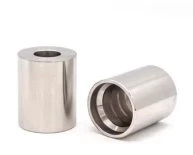
Surface treatments play a pivotal role in enhancing the performance, durability, and aesthetic appeal of hydraulic ferrules. As a seasoned hydraulic ferrule supplier, I’ve witnessed firsthand how the right surface treatment can transform a basic component into a high – performing, reliable part. In this blog, I’ll explore the various surface treatments available for hydraulic ferrules, discussing their benefits, applications, and considerations. Hydraulic Ferrule
1. Electroplating
Chrome Plating
Chrome plating is a popular choice for hydraulic ferrules. It provides a hard, wear – resistant surface that can withstand the harsh conditions often encountered in hydraulic systems. The chrome layer acts as a barrier against corrosion, protecting the underlying metal from rust and chemical attack. This is particularly important in applications where the ferrules are exposed to moisture, chemicals, or abrasive materials.
Chrome – plated ferrules also have a smooth surface finish, which reduces friction and wear during operation. This can lead to improved sealing performance and extended service life. Additionally, chrome plating gives the ferrules an attractive, shiny appearance, which can be beneficial for applications where aesthetics are a consideration.
However, chrome plating can be relatively expensive, and the process may require strict environmental regulations to be followed due to the use of potentially hazardous chemicals.
Nickel Plating
Nickel plating is another common electroplating option for hydraulic ferrules. It offers good corrosion resistance, similar to chrome plating, but at a lower cost. Nickel – plated ferrules are often used in applications where a high – level of corrosion protection is required, but where the budget is limited.
Nickel plating can also improve the solderability of the ferrules, which is important in some electrical or electronic applications that may be associated with hydraulic systems. The nickel layer provides a smooth and uniform surface, which can enhance the bonding between the ferrule and other components.
Zinc Plating
Zinc plating is a cost – effective way to provide corrosion protection for hydraulic ferrules. It forms a sacrificial coating, which means that the zinc will corrode preferentially to the underlying metal. This sacrificial protection helps to prevent rust and corrosion from reaching the ferrule, extending its lifespan in normal operating conditions.
Zinc – plated ferrules are commonly used in general – purpose hydraulic applications, where the corrosion environment is not extremely harsh. The process is relatively simple and inexpensive, making it a practical choice for many manufacturers.
2. Hot – Dip Galvanizing
Hot – dip galvanizing is a process in which the hydraulic ferrules are dipped into a bath of molten zinc. This process creates a thick, durable zinc coating on the surface of the ferrule, providing excellent corrosion protection. The zinc coating is metallurgically bonded to the base metal, which means it is highly resistant to chipping, cracking, and peeling.
Hot – dip galvanized ferrules are particularly suitable for outdoor or marine applications, where they are exposed to saltwater, humidity, and abrasive conditions. The thick zinc coating can withstand long – term exposure to these harsh environments, ensuring the integrity of the ferrule over an extended period.
However, hot – dip galvanizing can increase the dimensions of the ferrule slightly, which may need to be considered in applications where precise tolerances are required. Also, the appearance of hot – dip galvanized parts is not as smooth and shiny as some electroplated finishes, which may be a drawback in applications where aesthetics are important.
3. Powder Coating
Powder coating is a dry finishing process that involves applying a fine powder to the surface of the hydraulic ferrule. The powder is electrostatically charged, which causes it to adhere to the ferrule. Then, the ferrule is heated in an oven, and the powder melts and fuses to form a durable, protective coating.
Powder coating offers several advantages. It provides excellent corrosion and abrasion resistance, and it can be applied in a wide range of colors, allowing for greater customization. This can be beneficial for applications where the ferrules need to be color – coded for identification purposes.
The powder coating process is also more environmentally friendly than some electroplating processes, as it does not use solvents or produce harmful emissions. Additionally, powder – coated ferrules have a smooth, even finish that can enhance the overall appearance of the component.
However, powder coating may not be suitable for applications where a very high – precision surface finish is required, as the coating can add a small amount of thickness to the ferrule.
4. Conversion Coating
Phosphate Coating
Phosphate coating is a chemical conversion coating that is often used on hydraulic ferrules. It creates a porous surface layer that can improve paint adhesion and provide some degree of corrosion protection. Phosphate coatings are typically used as a pretreatment for painting or powder coating, as the porous surface allows the topcoat to bond more effectively to the ferrule.
In addition to improving paint adhesion, phosphate coatings can also reduce friction and wear in some applications. They are relatively inexpensive and can be applied quickly, making them a popular choice for large – scale production.
Chromate Conversion Coating
Chromate conversion coatings are used to provide corrosion protection and improve the appearance of hydraulic ferrules. They can be used on a variety of metals, including aluminum, zinc, and magnesium. Chromate conversion coatings form a thin, protective layer on the surface of the ferrule, which can prevent the formation of rust and corrosion.
However, the use of chromate conversion coatings has become more restricted in recent years due to the environmental and health hazards associated with hexavalent chromium. As a result, many manufacturers are now looking for alternative conversion coatings that are more environmentally friendly.
5. Anodizing
Anodizing is an electrochemical process that forms a protective oxide layer on the surface of aluminum hydraulic ferrules. The anodized layer is integral to the base metal, which means it is highly resistant to wear and corrosion. Anodizing can also improve the appearance of the ferrules, as it can be produced in a wide range of colors.
Anodized ferrules are commonly used in applications where a combination of corrosion resistance, lightweight, and aesthetic appeal is required. They are often found in the automotive, aerospace, and industrial equipment industries.
The thickness of the anodized layer can be controlled, allowing for customization based on the specific requirements of the application. However, anodizing can be more expensive than some other surface treatments, and the process may require specialized equipment and expertise.
Considerations When Choosing a Surface Treatment
When selecting a surface treatment for hydraulic ferrules, several factors need to be considered.
Corrosion Resistance
The level of corrosion resistance required depends on the operating environment of the ferrules. For example, in marine applications, where the ferrules are exposed to saltwater, a highly corrosion – resistant treatment such as hot – dip galvanizing or anodizing may be necessary. In less harsh environments, zinc plating or a phosphate coating may be sufficient.
Wear Resistance
If the ferrules are subjected to high levels of friction or abrasion during operation, a wear – resistant surface treatment such as chrome plating or anodizing should be considered. These treatments can help to reduce wear and extend the service life of the ferrules.
Cost
The cost of the surface treatment is an important consideration, especially for large – scale production. Electroplating processes such as zinc plating are generally more cost – effective than anodizing or powder coating. However, it’s important to balance cost with performance requirements to ensure that the selected treatment meets the needs of the application.
Aesthetic Requirements
In some applications, the appearance of the ferrules is important. Powder coating and anodizing offer a wide range of color options, which can be used to enhance the aesthetic appeal of the components. Chrome plating also provides an attractive, shiny finish.
Compatibility with Other Components
The surface treatment should be compatible with other components in the hydraulic system. For example, if the ferrules are to be welded or soldered, a surface treatment that does not interfere with these processes should be chosen.

As a hydraulic ferrule supplier, I understand the importance of choosing the right surface treatment for your specific application. Our team of experts can help you evaluate your requirements and select the most appropriate surface treatment for your ferrules. Whether you need high – performance corrosion protection, excellent wear resistance, or a customized aesthetic finish, we have the knowledge and experience to provide you with the best solution.
Hydraulic Adapter If you’re interested in learning more about our hydraulic ferrules and the surface treatments we offer, or if you’re ready to discuss a potential purchase, I encourage you to get in touch. We look forward to the opportunity to work with you and provide you with high – quality hydraulic ferrules that meet your needs.
References
- Metals Handbook Volume 5: Surface Engineering, ASM International
- Corrosion Engineering by Mars G. Fontana
- Electroplating Engineering Handbook, 5th Edition, edited by Paul G. Sheasby and Robert P. Pinner
Zhuji Feike Machinery Parts Co., Ltd.
With abundant experience, we are one of the most professional hydraulic ferrule manufacturers in China. We warmly welcome you to wholesale discount hydraulic ferrule made in China here from our factory. All customized products are with high quality and competitive price.
Address: No.28 Yangyan Road, Diankou Industrial Area, Zhuji City, Zhejiang China
E-mail: fk@zj-fk.com
WebSite: https://www.zjfeike.com/
