What’s up, film extrusion squad? If you’ve ever needed to wrap pallets, package snacks, or seal a shrinkable bag, chances are that stuff came from an ABA three-layer blown film machine. As someone who’s been deep in the game supplying these bad boys for over a decade, I get that most folks new to this side of manufacturing end up asking the same question: what even are the electrical components that make these machines tick? Yeah, I get it—hydraulics and screws get a lot of shine, but the electrical bits are the brains, the heart, and all the stuff that stops you from producing garbage film every single run. No overcomplicated engineering jargon here, just real talk from a guy who’s fixed more blown film machine wiring than I can count on one calloused hand. ABA Three Layer Blown Film Machine
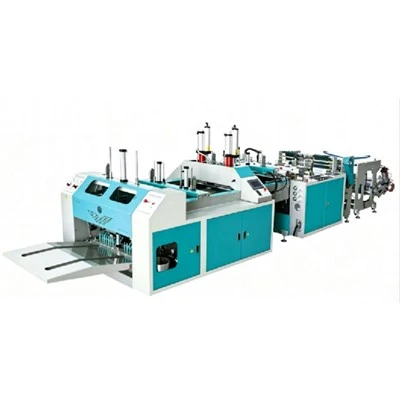
First off, let’s cut the “ABA three-layer” confusion real quick. It’s not rocket science—three layers: two A layers (usually the same resin, like linear low-density polyethylene, or LLDPE) and one middle B layer (often a different resin for strength, barrier, or cost savings). That tri-layer stack is why the film’s so versatile, and every single part that controls that stack’s thickness, temperature, and speed runs on electricity. No power, no film—simple as that.
Let’s start with the first thing anyone sees when they walk up to one of these machines: the HMI, or Human-Machine Interface. Yeah, some purists call it a SCADA system, but let’s be real—99% of the time, it’s that touchscreen panel you prod at like it’s a phone. This isn’t just a fancy display; it’s the command center. I’ve had operators come to me panicking because their HMI froze mid-run, and that’s exactly why we design these with backup and a simple lock screen so you don’t accidentally tweak a thickness setting while grabbing a coffee. On our machines, the HMI’s linked to every single electrical component, so you set the melt temp for the A layers, adjust the die gap for the B layer, and watch the line speed all from that 15-inch screen. It stores run recipes too—say you’re doing a 50-micron grocery bag film vs. a 30-micron shrink wrap, you pull that recipe up in 2 minutes instead of tweaking every setting manually. Game changer for consistency, trust me.
Next up, the real unsung hero: the PLC, or Programmable Logic Controller. If the HMI’s the touchscreen, the PLC’s the hidden box under the control panel that takes every command from that touchscreen and executes it—fast. Think of it as the machine’s brain, processing thousands of signals every second: “heater zone 3 is at 180C, turn it down”; “pull roll speed is off by 2%, adjust the motor”; “cut the cooling air if the bubble pressure drops.” Without a good PLC, your HMI’s just a pretty paperweight. I swear by the ones we spec on our machines—they’re rugged, not the cheap Chinese knockoffs that glitch when the plant’s ambient temp is 100 degrees F (we’ve all been there). The PLC also handles error codes, so if a thermocouple goes bad, it pops up a clear message on the HMI instead of leaving you staring at a blank screen going “wait, why is the melt temp spiking?”
Now let’s get into the power distribution side, because this is where so many cheap suppliers cut corners and run into fires or blown fuses. The main power cabinet is basically the machine’s electrical backbone— it takes the incoming 3-phase power (standard for industrial equipment) and distributes it to every part of the machine, with breakers, fuses, and surge protectors. No, you can’t skip the surge protectors— I’ve had a client in Texas lose a whole shift because a lightning strike fried half their machine’s electronics, and they tried to skimp on surge gear to save a few bucks. We oversize our main breakers too, because plants get power spikes all the time, and that extra room means less downtime. Also, we put disconnect switches everywhere—on the control panel, the extruder, the haul-off unit—so if you need to do maintenance, you don’t have to yank the main power cord and risk someone accidentally turning it on. Safety first, always.
Let’s move to the parts that actually make the film’s layers: the extruder drives. Each ABA machine has two or three extruders (wait, ABA is two A and one B, so that’s two A extruders and one B extruder, right?), and each has its own electrical drive. These aren’t just motors—they’re variable frequency drives (VFDs), which adjust the speed of the extruder screw based on what the PLC tells it. If you need more resin for the middle B layer (say you’re making a thicker film for heavy-duty bags), the B drive cranks up the screw speed; if you’re running a thinner film, it slows down. Old machines used to have DC drives, but VFDs are way more energy-efficient and easier to fix—swap out a VFD module in an hour vs. a whole DC motor, easy. I’ve had operators tell me our VFDs cut their energy bills by 15% vs. the cheap machines they had before, and that’s money in their pocket every month.
Then there’s the heating and temperature control system, which is make-or-break for film quality. Each extruder has separate heating zones along the barrel—usually 5 to 7 zones—plus the die head itself, all with electrical band heaters and cartridge heaters. Band heaters wrap around the extruder barrel, melting the resin as it moves along the screw, and cartridge heaters go into the die head to keep the melt at a consistent temp. But here’s the thing: you can’t just heat them and hope for the best. You need thermocouples—those little wire sensors stuck into the barrel and die that measure the temp, and send that signal back to the PLC. If a thermocouple is bad, the heater keeps cranking, you get overheated resin that breaks down, and your film turns yellow and brittle. We use type K thermocouples on all our machines—they’re durable, accurate, and way less likely to break than the cheap ones that fray if you bump them during cleaning. The temp controllers (we call them TC cards, but don’t get me started on the brand names) adjust the heater power every second to keep the temp within 1 or 2 degrees C of your setting—no hot spots, no cold spots, no bad film.
Now, the part that keeps the film shape consistent: the bubble stability system. Blown film works by extruding melted resin through a circular die, inflating it into a big bubble with air, then cooling it down. To keep that bubble from wobbling and ruining the thickness, you have electrical components: first, the blown air blower and its drive, which adjusts the air flow; then, thickness measurement sensors—usually infrared or beta-ray sensors that scan the bubble’s circumference and measure how thick each layer is. Those sensors send data to the PLC, which adjusts the die gap or the extruder speeds for each layer to fix any thin spots. For ABA machines, keeping the two A layers even is just as important as the middle B—no one wants a bag that’s thin on one side and thick on the other. We set our thickness sensors to auto-adjust every 0.5 seconds, so if there’s a tiny glitch in the resin, it’s fixed before it becomes a whole roll of bad film.
Last but definitely not least: the haul-off and winding controls, which are what pull the finished film into big rolls at the end. The haul-off unit has its own VFD drive that syncs its speed to the bubble’s inflation rate—if the haul-off is too fast, the bubble gets stretched too thin and breaks; too slow, the bubble collapses. Then there’s the winding unit, which has tension controls (another electrical component!) to keep the roll tight and even. If the tension’s too low, the roll has loose folds that ruin the film; too high, the film stretches and gets thinner. We use closed-loop tension control on our winders, meaning it adjusts automatically as the roll gets bigger (the bigger the roll, the more tension it needs to hold its shape). Some cheap machines just use a manual tension knob, and that’s a nightmare for new operators. Our guys can hit a “auto-wind” button and walk away, only to come back to a perfect roll every time.
Wait, let’s be real here—no machine works without backups and safety, right? That’s where the emergency stop (E-stop) system comes in. Every electrical part has an E-stop button—big red, easy to reach, on the control panel, the extruder, the haul-off, even the safety fence around the bubble. If something goes wrong—say the bubble breaks, or a worker’s glove gets caught, or a heater overheats—you hit that E-stop, and all power to moving parts (motors, blowers) cuts instantly, but the control panel still works so you can figure out what went wrong. We test our E-stops every time we set up a new machine, no exceptions. I’ve seen E-stops that were wired wrong and didn’t cut power when pressed, and that’s how you get injuries and destroyed machines—simple as that.
Now, before I wrap this up, let’s talk about what people usually miss. A lot of suppliers will tell you their machines are “fully electrical” but cut corners on backup parts. We keep spare thermocouples, VFD modules, and HMI cables in every machine’s toolbox because stuff breaks, and operators don’t want to wait 3 days for a replacement part while their line’s down. Also, all our electrical components are rated for industrial use—IP65 for the control cabinet, so if a cleaner accidentally sprays water on it during a washdown, no problem. That’s the stuff that saves you money long-term, not the cheap off-the-shelf parts that fail after a year.
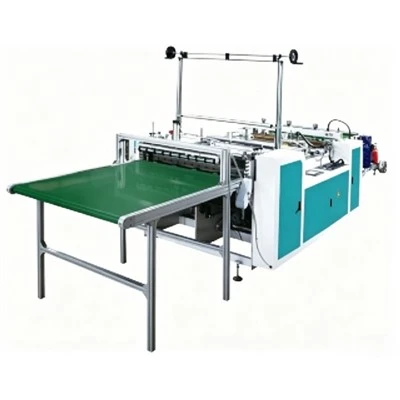
Look, I know a lot of you reading this are shop foremen, production managers, or small business owners who just need a machine that runs, doesn’t break, and makes good film. The electrical components aren’t just wires and boxes—they’re the difference between a machine that makes you money and one that costs you downtime and bad product. I’ve been supplying ABA three-layer blown film machines for 12 years, and the number one thing we hear from customers is how reliable our electrical systems are, even when they’re running 24/7. If you’re in the market for a new machine, or your current one is throwing error codes left and right and you’re sick of replacing parts, hit us up. We can walk you through what your specific application needs (whether you’re making garbage bags, packaging for food, or industrial shrink wrap), show you how the electrical system works, and make sure you get a machine that’s built to last. No pushy sales stuff, no hidden fees—just real talk from a guy who’s in the trenches with you.
Bag Making Machine References:
- Blown Film Extrusion Technology, 2nd Edition, Hanser Publishers, 2019
- “Electrical Control Systems for Film Extrusion Lines”, Journal of Plastics Technology, Vol. 18, No. 2, 2021
- Industrial Variable Frequency Drives: Selection and Application, McGraw-Hill, 2020
- Safety Standards for Plastic Processing Machinery, ISO 12100:2010
Ruian Jianhao Precision Machinery Co., Ltd.
As one of the most professional aba three layer blown film machine manufacturers and suppliers in China, we’re featured by quality products and good price. Please rest assured to wholesale durable aba three layer blown film machine for sale here from our factory. Welcome to contact us for customized service and quotation.
Address: No. 8, Jianshe Road, Beiyu Village, Shangwang Street, Ruian City, Wenzhou City, Zhejiang Province
E-mail: 1832333027@qq.com
WebSite: https://www.jianhaomachinery.com/
