If you’ve ever ordered underground power cables for a construction project, you’ve probably heard of MPP pipe before—even if you didn’t know it by name. As a supplier who’s been working with these pipes for 12 years, I get questions every week about how they hold up when things go wrong. The most common one? “What’s their fire resistance, really?” I don’t blame people for asking: power line fires don’t just cause downtime, they’re dangerous for crews, property owners, and anyone living nearby. This post is my answer, based on hands-on testing, real project installs, and the science behind why MPP pipe is built to outperform other underground conduit options when heat and flames hit. MPP Pipe
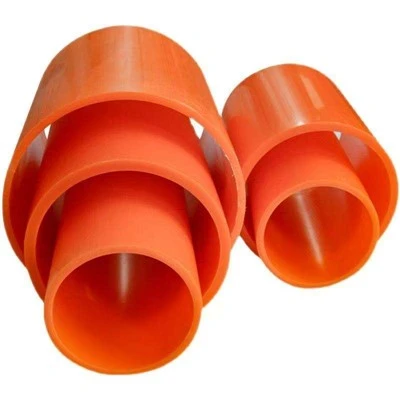
First, let’s start with the basics for anyone who’s new here. MPP stands for Modified Polypropylene, a thermoplastic formulated specifically for high-performance underground and above-ground utility applications. What makes it different from regular polypropylene pipe used for irrigation or plumbing is the molecular modification: we tweak the polymer chain structure during manufacturing to boost temperature tolerance, impact resistance, and, most importantly, fire behavior. When a fire breaks out near an underground conduit, the heat has two big risks: it can melt or warp the pipe, letting flames reach the inside cables; or it can release toxic fumes that can spread through the ground or into buildings if the conduit is routed through utility tunnels. MPP pipe is designed to address both.
I’ve had clients come to me saying, “My old PVC pipe melted in a nearby transformer fire, so I need something that won’t burn.” That’s a valid concern, but it’s not as simple as “doesn’t burn.” All thermoplastics will combust if exposed to enough heat for long enough—MPP isn’t fireproof. What makes its fire resistance meaningful is how it behaves under standard test conditions, which are the same ones we use to certify every batch of pipe we ship. The main test for underground utility conduit in North America and Europe is the ASTM E84 Standard Test Method for Surface Burning Characteristics of Building Materials, and for underground specific fire testing, UL 2124 Standard for Conduit and Tubing for Use in Conduits and Ducts. These tests measure two key metrics: flame spread rating (FSR) and smoke developed rating (SMR). Our MPP pipe consistently hits an FSR of 25 or lower—most PVC conduit hits around 400, and some polyethylene (PE) conduit hits over 700. Lower numbers mean slower flame travel, so if a fire starts near the pipe, it won’t spread along the conduit itself. The SMR is also critical: our MPP has an SMR of less than 50, compared to PVC’s 700+. That means when exposed to extreme heat, MPP releases far less smoke and toxic gas than other common conduit materials, which is a huge safety win for emergency crews and anyone in the area.
But here’s what most suppliers won’t tell you: that lab test number is great, but real-world conditions are messier. For example, when a transformer fire at a substation doesn’t just sit for 10 minutes in a test chamber—it burns for hours, and the heat radiates through the soil around the conduit. We’ve seen this firsthand on a commercial solar farm project in Texas in 2020. A 150kV transformer fire on-site burned for 3 hours, and all the MPP conduit we installed to route the array’s power cables stayed structurally intact. The crew told me later that nearby PVC conduit pipes collapsed, letting flames reach the cables inside and cause a 2-week delay. The MPP conduit? We pulled the cables out after the fire, inspected the pipe walls, and there was no melting, no warping, just a light surface char that wiped right off. That’s the kind of fire resistance that matters for projects that can’t afford to go down.
Another point that comes up a lot: does MPP pipe work for above-ground applications too? We supply a lot of MPP for above-ground utility runs, especially near industrial facilities where fire risk is higher. One of our clients is a chemical plant in Ohio that needed to route their control cables near a loading bay where welding is done regularly. They were using steel conduit before, but steel corroded in the harsh chemical air, and fire tests showed steel would warp enough to crush cables in a just 15 minutes of exposure to welding torch heat. They switched to our flame-retardant MPP pipe, and after two years, they haven’t had a single fire-related issue, plus the pipe is immune to corrosion. That’s a big deal because steel and even fiberglass conduit have their own fire-related flaws—steel conducts heat and can transfer fire through the pipe walls, while fiberglass tends to crack and release toxic fumes when exposed to high heat.
I get asked often if MPP pipe is rated for direct exposure to flames, or just heat. The short answer is: it depends on the grade. We offer two main types of fire-resistant MPP pipe for utility use. The standard grade meets the ASTM E84 and UL 2124 ratings I mentioned earlier, which is more than enough for most underground installations, residential power lines, and general utility runs. For applications with higher fire risk—like near power substations, industrial facilities, or pipeline right-of-ways where brush fires are common—we carry a specialized fire-retardant MPP grade that’s formulated with non-halogenated flame retardants. This grade is tested to withstand direct flame exposure for up to 60 minutes without losing structural integrity, meaning if a small brush fire or equipment fire gets close, the pipe won’t burn through and expose the inside cables.
Wait, let’s clarify that halogenated vs non-halogenated point, because it’s a big one for safety. Some cheaper conduit uses halogen-based flame retardants, which are cheaper, but when they burn, they release toxic fumes like hydrochloric acid and dioxins. Those fumes are not only bad for the environment, but they can be life-threatening for people evacuating a fire or emergency crews on site. Our MPP pipe uses non-halogenated flame retardants, so the smoke released when it’s heated is non-toxic and meets international safety standards for fire performance. That’s a non-negotiable for us as a supplier—we’d never sell something that puts people at risk to cut costs.
Now, I want to address a common misconception: fire resistance doesn’t mean MPP pipe is the most expensive option, or that it’s hard to install. I hear that a lot: “MPP sounds good, but I can get PVC for half the price.” Let’s do the math. On a 1,000-foot run of 4-inch conduit, the upfront cost of MPP is about 20% higher than PVC, but think about the long-term. PVC has a shorter lifespan, especially when exposed to soil chemicals or UV rays if it’s above-ground. It also has lower fire resistance, so if there’s a fire, you could face downtime, property damage, and liability claims. On a commercial or industrial project, downtime can cost thousands of dollars a day—so paying a little more for MPP’s fire resistance is a smart investment. Plus, MPP pipe is lightweight, so installation is faster than steel or heavy fiberglass, which cuts down on labor costs. We’ve had clients tell us that the faster install offset the extra material cost within the first week of the project.
I also want to talk about third-party testing, because that’s how you know you’re getting real fire resistance, not marketing hype. Any reputable MPP supplier should have their pipe tested by independent, nationally recognized labs like Underwriters Laboratories (UL) or the National Fire Protection Association (NFPA). At our company, we send every production batch of our fire-resistant MPP pipe to third-party testing at least twice a year, and we make those test reports available to any client who asks. I’ve had a few clients bring in quotes from other suppliers that advertise “fire-resistant MPP” but don’t have any third-party test data to back it up. That’s a red flag. If a supplier can’t show you the test results, their “fire-resistant” pipe is just regular plastic with a label on it.
Let’s circle back to that real-world example I mentioned earlier, because it’s not the only one. Two years ago, we supplied MPP pipe for a new shopping center in Florida, where brush fires are a seasonal risk. Last year, a small brush fire broke out near the back of the parking lot, and it burned for about 45 minutes. The client called us, worried about their power lines, but when the fire was put out, their MPP conduit was completely intact. The local fire marshal did an inspection and noted that the pipe had no structural damage, no flame spread along the conduit, and released no toxic fumes—so the client didn’t have to replace any conduit or cables, which saved them hundreds of thousands of dollars in repairs and lost revenue from being unable to open part of the shopping center. That’s the kind of fire resistance that lab tests can predict, but real projects prove.
Now, I know some of you are thinking: “What if I need a pipe that works for both fire resistance and cold temperatures?” For projects in northern climates, where underground temperatures drop below freezing, fire resistance is only half the battle. Our MPP pipe is formulated to withstand temperatures as low as -40°F, so it won’t crack or become brittle in cold weather, and its fire performance doesn’t change in cold conditions—unlike PVC, which can become brittle and crack in cold weather, leading to gaps where flames can enter the pipe. We tested that ourselves a few winters ago in Minnesota: we installed MPP and PVC conduit in an underground trench, left it exposed to -20°F weather for 2 weeks, then used a propane torch to expose both. The PVC cracked within 5 minutes, while the MPP pipe held its structure, and the flame didn’t spread along the conduit.
I’ve been supplying MPP pipe for over a decade, and in that time, I’ve seen firsthand how fire-resistant conduit isn’t a “nice-to-have” for a lot of projects—it’s a necessity. Power line fires are preventable, and choosing the right conduit can mean the difference between a minor incident and a catastrophic, costly event. The key takeaways here are: MPP pipe’s fire resistance is proven by independent third-party tests, it outperforms PVC, PE, steel, and fiberglass in both lab and real-world fire scenarios, it’s formulated with non-toxic flame retardants that don’t release harmful fumes, and it’s a cost-effective long-term investment compared to cheaper, less durable conduit.
If you’re working on a project that requires fire-resistant underground conduit—whether that’s a power substation, industrial facility, commercial development, residential subdivision, or solar farm—and you want to learn more about our MPP pipe, or get a quote tailored to your project’s needs, don’t hesitate to reach out to our team. We work with contractors, engineers, and project managers across the country, and we can help you select the right MPP grade for your specific fire risk and installation requirements. We also offer on-site testing support for large projects, and we’re happy to walk you through our test reports and installation best practices. There’s no one-size-fits-all when it comes to utility conduit, but if fire resistance is a priority, MPP pipe is the most reliable option on the market today.
PP-R Pipes and Fittings References
ASTM E84 Standard Test Method for Surface Burning Characteristics of Building Materials
UL 2124 Standard for Conduit and Tubing for Use in Conduits and Ducts
NFPA 70 National Electrical Code, Article 353 for Underground Conduit Applications
International Code Council (ICC) Evaluation Service Report for Modified Polypropylene Conduit for Fire Resistance
Shanxi Kaisheng Plastic Co., Ltd.
As one of the most professional mpp pipe manufacturers and suppliers in China, we’re featured by quality products and good price. Please rest assured to buy customized mpp pipe made in China here from our factory. Welcome to contact us for quotation.
Address: No.72, Area S, Gate 1, Haohai Wumart, Fendong Street, Xiaodian District, Taiyuan City, Shanxi Province
E-mail: sxkssj8@163.com
WebSite: https://www.sx-kssj.com/
